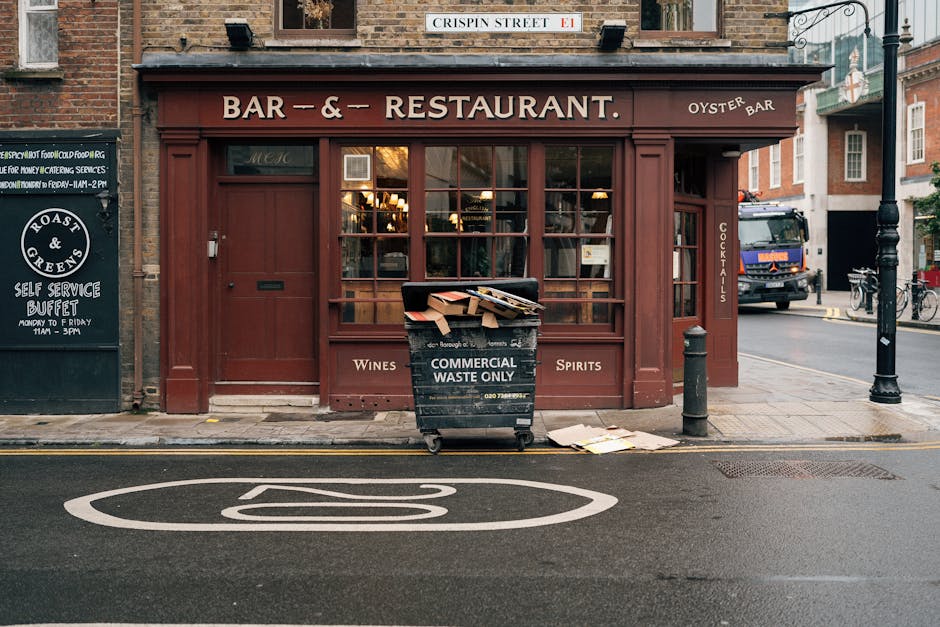
Avoid fines: London council bulky waste permits explained

If you are trying to get rid of a sofa, mattress, broken wardrobe, or a pile of renovation leftovers, the last thing you want is a nasty surprise from the council. That is where Avoid fines: London council bulky waste permits explained really comes into play. In London, bulky waste collection rules can be a bit patchy from borough to borough, and getting the wrong permit, booking the wrong service, or leaving items out at the wrong time can lead to delays, rejected collections, or even enforcement action.
This guide cuts through the confusion. You will learn what bulky waste permits are, when they matter, how London council collections usually work, what common mistakes lead to fines, and how to choose the right disposal route with less stress. Truth be told, a lot of problems start with one simple thing: people assume every council does it the same way. They do not. Not even close.
Whether you are a homeowner, tenant, landlord, housing manager, or business owner dealing with oversized waste, this article will help you make a safer, smarter decision.
Practical summary: if your items are too large for normal bins, or you need to leave bulky rubbish on a public pavement, road, or shared access area, check the council rules first. One quick booking or permit check can save a lot of hassle later.
- Why this matters
- How bulky waste permits work
- Benefits of using the right route
- Who needs a permit or collection
- Step-by-step guidance
- Expert tips
- Common mistakes to avoid
- Tools, resources and recommendations
- Law, compliance, standards, or best practice
- Options and comparison
- Case study
- Practical checklist
- Frequently asked questions
Why Avoid fines: London council bulky waste permits explained Matters
Bulky waste sounds straightforward until you are standing in front of a broken sofa, a mattress you cannot drag downstairs, or an old fridge that needs removing before Friday. In London, the practical issue is not just disposal. It is compliance. Councils often have specific procedures for large-item collections, skip permits, pavement placements, and shared property access. Miss one step and the collection may not happen, or worse, the waste may be treated as illegally deposited.
This matters because bulky waste is visible. It sits on the street. It can obstruct pavements, attract complaints, and create a clear enforcement issue. If a council decides the waste was put out incorrectly, a fine or notice can follow. That is why understanding bulky waste permits is more than admin. It is a simple way to protect yourself from avoidable trouble.
There is also a financial angle. Councils may offer collection services, but they can come with limits on what they take, how many items are allowed, and where they will collect from. If you need a permit for placing waste in a communal or public area, the wrong choice can mean paying twice: once for the failed attempt, and again for the correct service.
For larger clearances, it often makes sense to compare council arrangements with a private bulky waste service such as bulky waste collection or large item collection. That does not mean one option is always better. It means you should choose the one that fits the item, the location, and the time pressure.
Let's face it: nobody wants to be the person with a half-dismantled wardrobe blocking the stairwell for three days. A little planning goes a long way.
How Avoid fines: London council bulky waste permits explained Works
At a high level, bulky waste permits and collections are about getting authorisation to move, leave, or collect oversized waste safely and lawfully. In London, the details vary by borough, but the pattern is usually similar:
- You identify the item or items you need removed.
- You check whether the council accepts them through a bulky waste booking, a large-item collection, or a separate permit process.
- If the waste needs to be placed on public land or in a shared location, you may need a permit or approval.
- You book the collection or arrange disposal with the required conditions.
- You place the items exactly as instructed, at the right time and in the right location.
The word "permit" can mean a few different things depending on the council and the situation. Sometimes it refers to permission to place waste in a public or controlled area. Sometimes people use it loosely when they actually mean a large-item collection booking or a waste transfer authorisation. This is where confusion creeps in.
For example, a resident in a flat might think they can leave a mattress in the communal bin area because the council said bulky items are collected. But if that area is privately managed or shared by multiple buildings, the building manager may require approval first. Or the council may not collect from inside the communal space at all. Small detail. Big difference.
If you are dealing with items from a property clearance, it is worth looking at related services such as home clearance, house clearance, or flat clearance. These services are often more suitable when the waste is mixed, heavy, or spread across multiple rooms rather than being just one or two large objects.
In practical terms, councils care about three things: safety, access, and responsibility. Can the waste be collected without risk? Is it positioned where the crew can legally and safely access it? And does the person placing it out have the right permission to do so? That is the heart of it.
Key Benefits and Practical Advantages
Using the right bulky waste route is not just about avoiding penalties. It makes the entire job easier.
- Less risk of fines or refusals: if you follow the borough's process, there is less chance of the collection being rejected.
- Cleaner disposal path: you know where the waste is going instead of guessing.
- Better timing: bookings and permits help you plan around move-outs, tenancy changes, or refurbishment dates.
- Reduced neighbour complaints: nobody likes a sofa outside the entrance for longer than necessary.
- Safer handling: bulky items can be awkward, sharp, heavy, or dusty.
- More predictable costs: you avoid the back-and-forth of failed collections and rescheduled visits.
There is also a quieter benefit: peace of mind. When you know the waste is being handled properly, you stop worrying about whether a complaint might land on the doormat. That matters, especially for landlords and housing teams who need things to move quickly and cleanly.
In many cases, a private service can complement council rules rather than replace them. For instance, if you need a same-week uplift for a sofa, you may find sofa collection or furniture disposal more flexible than waiting for a council slot. Again, the right answer depends on the item, urgency, and location.
Key takeaway: the best bulky waste plan is the one that is lawful, realistic, and actually fits your space. Fancy in theory? Not useful in practice.
Who This Is For and When It Makes Sense
This topic is relevant to far more people than you might think. If you live in London, bulky waste rules can affect everyday situations that feel minor at first and then turn into a headache by lunchtime.
You may need to understand permits or collections if you are:
- a tenant clearing out unwanted furniture before moving out
- a landlord dealing with leftover items after a tenancy ends
- a homeowner replacing old furniture or appliances
- a flat resident with limited stair access or no lift
- a property manager organising clearance from shared areas
- a small business disposing of office furniture or stock room waste
- someone handling a bereavement or probate clearance, where the volume suddenly becomes overwhelming
It makes sense to check permit and collection rules when:
- items are too large for normal bins
- the waste needs to go on a pavement, driveway, or shared space
- you are using a council bulky item collection service
- you live in a controlled access block or estate
- you have mixed waste, not just one item
- the collection is time-sensitive, such as before a handover or inspection
A common example is a student flat at the end of term. Everyone is rushing. There is a bed frame, a wobbly desk, and a mattress that no one wants to argue over. In that moment, the temptation is to just leave everything downstairs and hope for the best. That is exactly the sort of situation where people end up with complaints, missed collections, or avoidable charges.
If the clearance is bigger than one or two items, a broader service such as rubbish clearance or waste clearance may be the more sensible route.
Step-by-Step Guidance
If you want to avoid fines and keep the process smooth, follow this simple sequence.
1) Identify exactly what you are disposing of
Start by listing the items. Sofa, wardrobe, mattress, fridge, chairs, broken shed panels, office desk. Be specific. Councils and disposal teams often treat certain items differently, especially electricals, white goods, and heavy furniture.
If you are removing a fridge or freezer, for instance, you may need a route that handles refrigerants and appliance safety properly. That is why services like fridge disposal and white goods recycle can be more appropriate than generic rubbish removal.
2) Check whether the council offers a bulky waste booking or permit
London boroughs vary a lot. Some offer booked large-item collections. Some have charges. Some have limits on quantity or item type. If waste must be placed in a communal area or on the street, you may need permission beyond the booking itself. Read the terms carefully. Yes, even the boring bits.
3) Confirm access and placement rules
Ask where the items should be placed, what time they should be out, and whether they need to be bagged, dismantled, or separated. A collection can fail simply because the item is blocking a fire exit or not visible from the agreed point.
4) Prepare items correctly
Remove loose personal belongings. Empty drawers. Secure sharp edges. If possible, dismantle large items into manageable parts. This helps both safety and speed. In our experience, a few minutes with a screwdriver can save a very awkward collection day.
5) Keep proof of booking or permission
Save emails, receipts, and booking references. If a neighbour queries the waste, or an enforcement officer asks who authorised it, you have something to show.
6) Arrange the collection at the right time
Do not leave bulky waste out too early. That is a common trigger for complaints. Aim for the window the council or collection provider specifies, not "the day before just in case." Just in case is often exactly what causes problems.
7) Follow up if the item is not collected
If a collection is missed, find out why before moving the waste again. Sometimes access issues, parking, or item restrictions are the issue. Sometimes the problem is a simple booking mismatch.
For bigger jobs, services such as furniture collection, mattress collection, or business waste removal may be a better fit than trying to force everything through a council route.
Expert Tips for Better Results
A few small habits make a big difference with bulky waste in London.
- Measure doorways and stairwells before collection day. It sounds obvious, but people forget. Then the item will not budge, and everyone is standing there in socks, staring at a corner.
- Photograph the items before they go out. Handy if you need to prove condition, count, or placement.
- Separate recyclable items where possible. Some services or facilities handle certain materials more efficiently when they are sorted.
- Book earlier than you think you need to. Especially if you have a move-out date or estate check.
- Keep communal areas clear. If you live in a block, leaving waste near entrances can trigger complaints faster than you might expect.
- Ask about weight or size limits. One giant wardrobe can be trickier than three smaller items.
One quiet tip that helps a lot: if you are comparing council collection with a private provider, check whether the waste needs to be taken from inside the property, from the kerb, or from a loading bay. That access detail changes everything.
Another useful habit is to make a fast inventory before you start. It sounds small, but it stops those annoying "oh, and also this chair" moments halfway through the booking.
Common Mistakes to Avoid
This is where fines and failed collections usually start.
- Assuming all London boroughs have the same rules. They do not.
- Leaving waste out too early. This often leads to complaints or enforcement.
- Confusing a booking with a permit. A collection slot is not always the same as permission to use a communal or public space.
- Mixing restricted items with general bulky waste. Fridges, mattresses, and electricals may need special handling.
- Not checking building rules. Private estates and managed blocks can have extra requirements.
- Ignoring access issues. A locked gate, parked car, or narrow stairwell can derail the whole job.
- Putting out someone else's waste. If the council cannot link it to the right person or property, it can become a messy dispute.
A slightly awkward but important point: some people think a bulky item can just be "left for the council." That phrase sounds innocent. In reality, if it is not part of an authorised collection and it sits in the wrong place, it may be treated as fly-tipping. Not ideal. Not at all.
When the waste is from a full property clear-out, it is often safer to use a structured service like house clearance or garage clearance so the whole job is handled in one go.
Tools, Resources and Recommendations
You do not need a complicated toolkit, but a few practical things help enormously.
| Tool or resource | Why it helps | Best used for |
|---|---|---|
| Measuring tape | Checks whether large items will fit through doors, lifts, and corridors | Furniture, beds, wardrobes |
| Phone camera | Creates a record of item condition and placement | Collections, disputes, insurance records |
| Allen keys / screwdriver | Helps dismantle furniture quickly | Desks, beds, flat-pack items |
| Gloves | Protects hands from splinters and sharp edges | General lifting and moving |
| Booking confirmation or permit copy | Shows what was authorised and when | Council or private collections |
As for service selection, ask yourself three questions:
- Is this one item or a larger clearance?
- Do I need council permission or building approval first?
- Do I need the waste gone fast, or can I wait for a booked slot?
If speed matters, a more direct collection route may be better. If budget matters and timing is flexible, a council option may suit. If the waste includes mixed rubbish, broken furniture, and a few heavier pieces, a broader service like waste removal or rubbish removal may be more efficient.
For households focused on responsible disposal, it is also worth reading about recycling and sustainability. Even when the main goal is simply to clear space, it helps to know how different items may be sorted or recovered.
Law, Compliance, Standards, or Best Practice
Bulky waste compliance in London is not one single rulebook. It is a mix of council procedures, property rules, safe waste handling expectations, and common-sense environmental responsibility. That can sound frustrating, but there is a clear way to stay on the right side of it.
First, follow the instructions given by the relevant council or property manager exactly. If a collection is booked for a certain day, place, and time, stick to that. If the council says not to obstruct the pavement, do not improvise. If the building forbids waste in a shared corridor, respect that too.
Second, handle waste responsibly. Large items can contain materials that need care, especially electrical appliances, mattresses, metal frames, and furniture with mixed components. If you are not sure how something should be handled, ask before it is left out. That is a much safer habit than assuming.
Third, keep access and public safety in mind. Waste left in the wrong place can create trip hazards, block emergency access, or attract complaints from neighbours and passers-by. In a city like London, those issues are taken seriously.
Fourth, do not treat discarded property as automatically "free for the taking." If an item is on a communal site or street and it is not clearly authorised for collection, the legal position can become messy quickly.
Best practice is simple: get permission, follow the booking rules, and document what you have done. It is not glamorous. It works.
Options, Methods, or Comparison Table
Choosing between council bulky waste, a private collection, or a mixed clearance service depends on urgency, item type, and access. Here is a straightforward comparison.
| Option | Best for | Main advantage | Main drawback |
|---|---|---|---|
| Council bulky waste collection | Simple item disposal where timing is flexible | Can be suitable for residents who meet the borough rules | Rules and availability vary; may involve limits and delays |
| Private bulky waste collection | Fast removals, awkward access, or specific item types | More flexible scheduling and collection from harder locations | Costs may be higher depending on load and service |
| Full property clearance | Multiple items, mixed waste, or end-of-tenancy jobs | Covers the whole space in one visit | May be more than you need for a single item |
If you only have one sofa, a dedicated service such as sofa removal may be enough. If it is an entire room worth of pieces, a broader service like furniture clearance could be the smarter choice.
The best option is not always the cheapest on paper. Sometimes the true cost is the time you lose chasing a missed slot or the stress of trying to store a bulky item in a hallway. And that, frankly, is not worth it.
Case Study or Real-World Example
Here is a realistic example based on common situations people face in London.
A couple in a second-floor flat in west London were replacing a sofa, a mattress, and a chest of drawers before new tenants moved in. They initially planned to leave the items by the building entrance and use a council bulky collection. After checking the building rules, they discovered the entrance was part of a managed communal area, and the estate manager required approval before any waste could be placed there. They also learned that one item needed separate handling because it was an electrical appliance.
Instead of risking a rejected collection or complaint, they did three things:
- confirmed what could be collected and from where
- dismantled the furniture in advance
- used a service that could take the items from inside the flat
The result was simple: the rooms were cleared without blocking the corridor, the handover stayed on schedule, and no one had to have an awkward conversation with the building office.
This is the real lesson. Most bulky waste problems are not dramatic. They are small process mistakes made under pressure. A flat move, a tenancy deadline, a rainy Tuesday afternoon, one item too many. That is usually how it happens.
Practical Checklist
Use this checklist before you book or place bulky waste out for collection.
- List every item you need removed
- Check whether any item needs special handling
- Confirm the council or building rules for your location
- Decide whether you need a permit, a booking, or both
- Measure access points, stairways, and lifts
- Remove loose contents and personal items
- Dismantle large furniture if possible
- Take photos of the items before collection
- Store booking details, permit emails, or approvals
- Place waste only at the approved time and location
- Keep pathways and exits clear
- Follow up immediately if the collection is missed
Quick reassurance: if this feels like a lot, that is normal. It looks longer on paper than it feels in practice. Once you have done it once, the process becomes much easier.
Conclusion
Bulky waste in London is one of those jobs that looks simple until the rules get involved. But once you understand the basics, it becomes much easier to handle well. The main thing is to know whether your situation needs a council bulky waste booking, a permit for placing items in a shared or public area, or a more flexible private collection.
If you remember nothing else, remember this: check the rules first, confirm access, and do not leave waste out blindly. That one habit can save time, money, and a lot of unnecessary aggravation. And in a busy city, that is worth quite a bit.
If you are comparing your options, a service such as council large item collection can help frame what the council route involves, while broader clearance pages like waste disposal and council waste collection can help you think through the next step. Choose the route that fits your property, your timing, and your peace of mind.
Get a free quote today and see how much you can save.
Frequently Asked Questions
What is a bulky waste permit in London?
A bulky waste permit usually means permission or authorisation related to placing, moving, or collecting oversized waste in line with borough or property rules. In some cases, people use the term to describe a collection booking, so it is worth checking exactly what your council means.
Do all London councils have the same bulky waste rules?
No. London boroughs can differ quite a lot on what they collect, how bookings work, whether charges apply, and where waste may be left. That is why you should always check the rules for your specific area rather than assume a standard process.
Can I leave bulky waste on the pavement if I have booked a collection?
Not always. Some councils allow it only at a specific time and in a specific place, while others require the items to be left in a different location. If the pavement is public land, you may need extra permission or a more precise booking arrangement.
What happens if I put bulky waste out without permission?
It may be treated as unauthorised waste or fly-tipping, especially if it blocks access or is left in a public or shared area. The result can be a fine, a removal notice, or a failed collection. It is one of those "better not risk it" situations.
Are furniture and mattresses treated the same way?
Not always. Furniture, mattresses, and appliances can be handled differently depending on the council or collection provider. Mattresses and electrical items often need extra care, so do not assume they go in the same pile as general furniture.
Is a council bulky waste collection cheaper than a private collection?
It can be, but not always in a way that makes it the best option. Council collections may be cheaper upfront, but private services can save time and avoid repeat visits if you need speed, access help, or multiple items removed at once.
Do I need a permit for items in a private driveway?
Usually not for the driveway itself, but it depends on the property and whether any part of the placement affects public space, shared access, or building rules. If the property is in a managed block or estate, check the site rules too.
Can a landlord or agent arrange bulky waste removal?
Yes, and often they should if the items are left behind after a tenancy ends. It is sensible to document what was removed, when, and by whom, especially if the cost may be passed on or recorded for compliance purposes.
What items are commonly rejected by bulky waste collections?
Rejections often happen with items that are unsafe, too heavy, contaminated, too many for the booking, or not included in the council's list. Fridges, certain electricals, and mixed construction waste can be tricky, so check before you book.
How do I avoid a fine when disposing of large items in London?
Use the correct booking or permit process, place items only where and when instructed, and keep records of the arrangement. If you are unsure, ask before leaving the waste out. That one pause can save a lot of trouble.
What if my bulky waste collection is missed?
Do not move the items without checking why it was missed. It may be a placement issue, an access issue, or a booking mismatch. Contact the council or provider, keep your booking reference handy, and get written confirmation of the next step if possible.
When is a private bulky waste service the better choice?
If you need fast removal, have awkward access, are clearing multiple items, or want collection from inside the property, a private service is often more practical. For many people, that is the difference between a job done and a job endlessly put off.